Albania: Why Europe's Most Underrated Country Belongs on Every Australian's Travel List
There is a moment, somewhere between landing in Tirana and sitting down to your first meal of byrek and raki on a warm Albanian evening, when you realise that you have stumbled upon something genuinely rare in modern travel — a European destination that hasn't yet been smoothed into sameness by mass tourism.
I'm Michelle Bandura from Travellers Lounge, and Albania is one of those destinations I feel almost proprietary about. I've been there, I've fallen completely under its spell, and I want more Australians to discover it before the rest of the world catches up — because they will, and when they do, something irreplaceable will have changed.
Albania is not yet on the standard European itinerary. Most Australians heading to Europe still default to Italy, France, Greece, and Spain — all wonderful, all worth visiting, but all extraordinarily well-trodden. Albania sits right next door to Greece, shares an Adriatic coastline of breathtaking beauty, has a history stretching back to ancient Illyria, produces food and wine of real quality, and welcomes visitors with a warmth and generosity that is genuinely striking. And it does all of this at a fraction of the cost of its more famous neighbours.
This is not a destination for travellers who want the familiar. It is a destination for those who want the real — the unpolished, the surprising, the genuinely different. And in my experience, those are exactly the travellers who come home most transformed.
What Makes Albania So Special
Albania spent nearly fifty years as one of the most isolated countries on Earth under Enver Hoxha's communist regime — a period that ended in 1991. That isolation, which was devastating for the Albanian people in ways that are still being worked through, had an unintended consequence for travellers: it preserved the country. Ancient cities were not modernised into anonymity. Coastlines were not developed into resort strips. Rural traditions continued uninterrupted. The Albania that emerged from isolation was rough around the edges — but it was authentic in a way that is extraordinarily rare in Europe.
Three decades on, Albania has changed enormously — and continues to change rapidly. Tirana is a vibrant, youthful, increasingly sophisticated capital. The Albanian Riviera has developed genuine hospitality infrastructure. The food scene has evolved into something genuinely exciting. But the essential character of the country — warm, proud, generous, surprising — remains completely intact. Go now, while that character still defines the experience.
Tirana — A Capital That Surprises
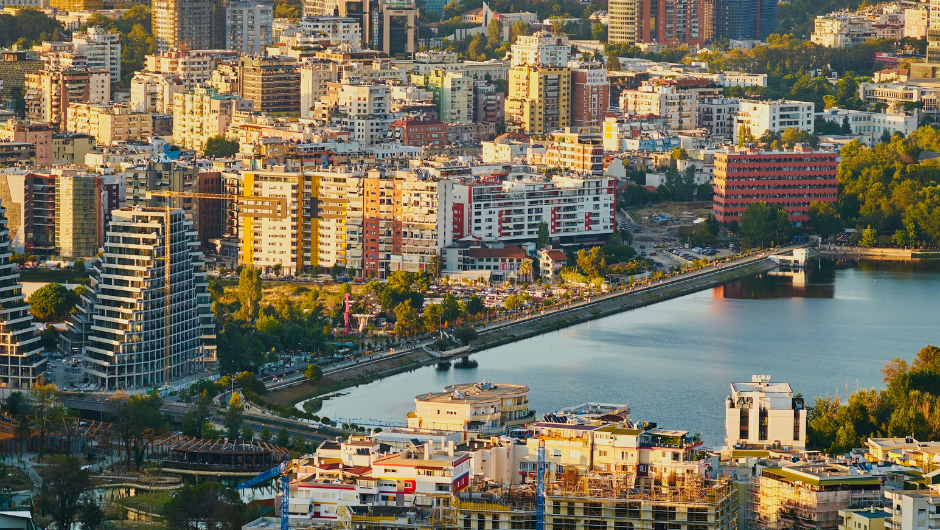
Most visitors expect very little of Tirana and are immediately won over. The capital is small enough to navigate on foot, full of colour — quite literally, the former mayor famously had the city's grey communist-era apartment blocks painted in vivid geometric patterns — and animated by a cafe culture and restaurant scene that punches well above what you'd expect from a city of this size.
The National History Museum on Skanderbeg Square is an essential starting point for understanding the extraordinary sweep of Albanian history — from Illyrian origins through Greek and Roman occupation, the Ottoman centuries, and the communist period. The Bunk'Art museums, installed inside two of Hoxha's vast nuclear bunkers, offer a haunting and fascinating insight into the paranoia and isolation of the communist era. And the rooftop bars and coffee shops of the Blloku neighbourhood — once the exclusive enclave of the communist elite, now the city's hippest district — are a perfect place to absorb the energy of a city that is very much finding its own voice.
Best time to visit Tirana: April to June and September to October. The city is pleasant year-round but summers can be very hot. Spring and autumn offer the ideal combination of warm temperatures, lower tourist numbers, and the full energy of the city's cultural life.
The Albanian Riviera — The Mediterranean Coast That Tourism Forgot
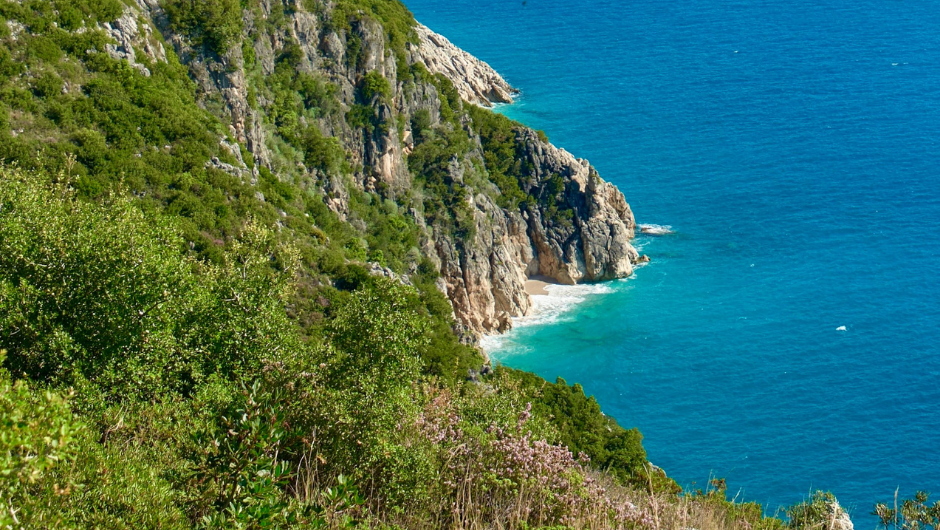
The Albanian Riviera is, without question, one of the most beautiful stretches of coastline in the entire Mediterranean — and it remains one of the least known. Running south from Vlorë to the Greek border at Sarandë, the Riviera is a succession of bays, beaches, and hillside villages that feel like the Greek islands or the Amalfi Coast must have looked fifty years ago.
I have driven this coastline, stopping at beaches where the water is a shade of turquoise that seems almost artificial, at villages where the tavernas serve grilled fish caught that morning, and at viewpoints where the sea stretches to the horizon with not another tourist in sight. It is extraordinarily beautiful — and the fact that you can experience it without crowds, without queues, and without paying premium European prices makes it feel almost illicit.
The village of Himara is a favourite of mine — a quiet fishing town with a castle above it, a handful of excellent restaurants, and beaches that rival anything in Greece. Ksamil, near Sarandë, has clear shallow water and small islands you can swim to. And the drive along the coastal road itself — the Riviera winding above the sea — is one of the most scenic drives in Europe.
Best time to visit the Albanian Riviera: May to June and September to October. July and August are peak season — warm and beautiful but the Riviera does get busier in summer, particularly with visitors from Kosovo and North Macedonia. Shoulder season gives you the best of the weather with far fewer people.
History and Culture — A Civilisation Older Than Rome
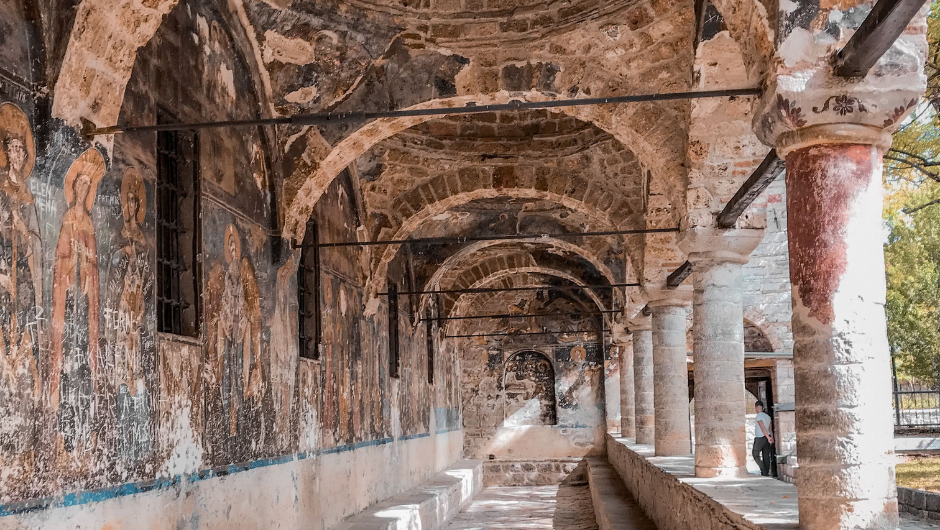
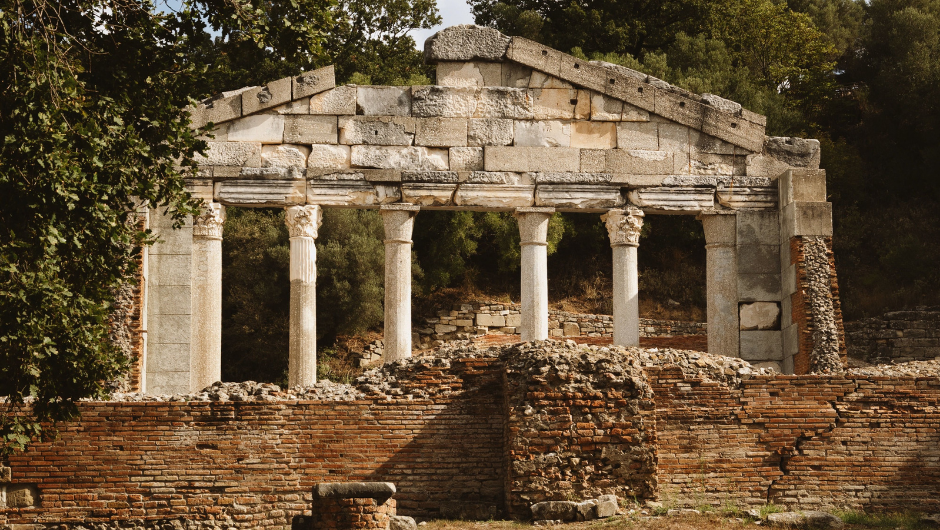
What many Australians don't realise is that Albania sits on some of the most historically significant ground in the Balkans. The ancient site of Butrint — a UNESCO World Heritage Site near Sarandë — was a thriving city under the Greeks, then the Romans, then the Byzantines, and today its ruins sit in a landscape of lakes and forest that is genuinely enchanting. Walking through Butrint at dawn, before the day visitors arrive, is one of the quieter wonders of European travel.
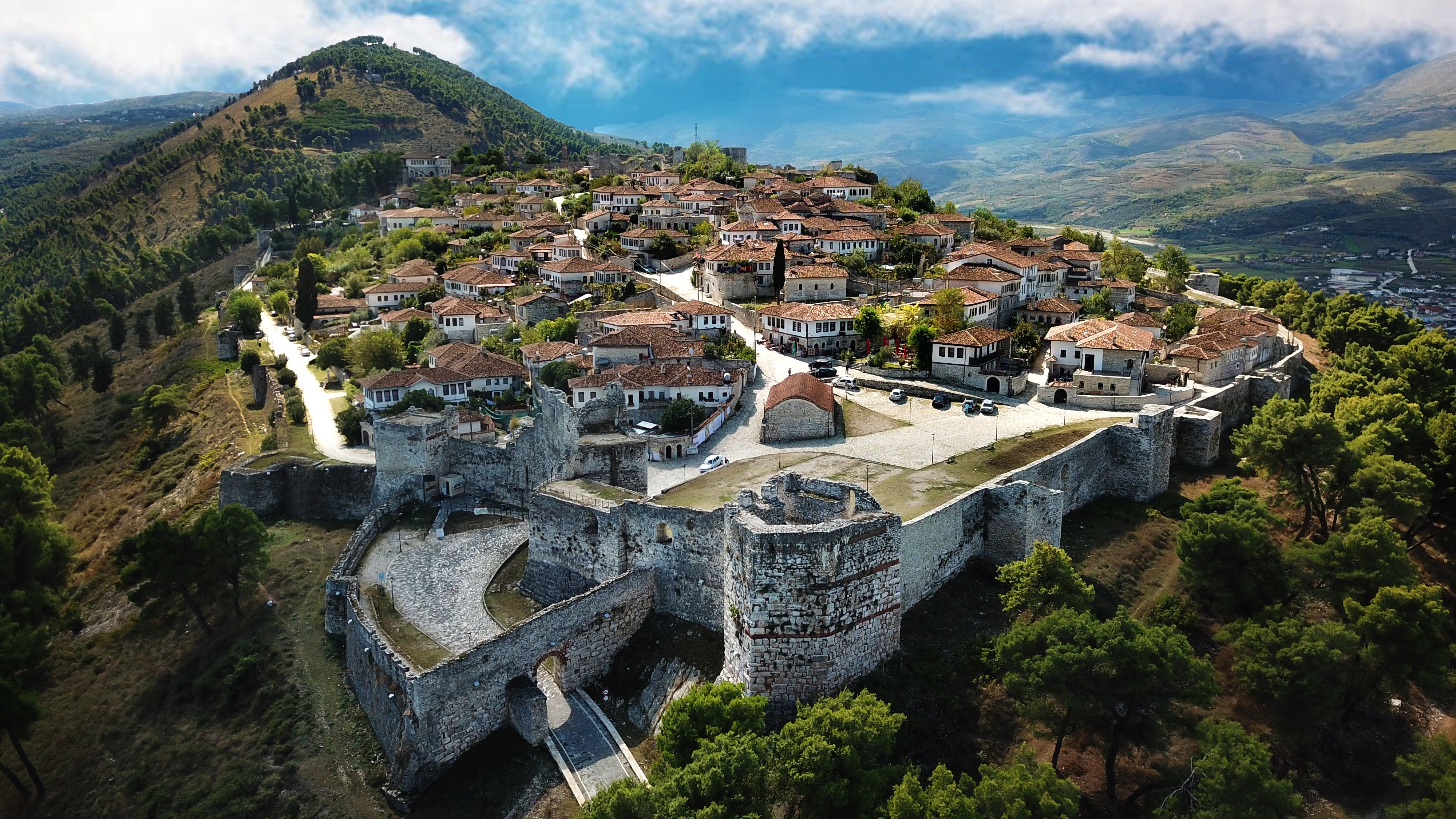
Berat, known as the City of a Thousand Windows for its characteristic Ottoman-era houses stacked up the hillside, is another UNESCO World Heritage Site and one of the most beautiful towns in the Balkans. The old castle district — Kalaja — is still inhabited, which gives it a living quality that purely preserved historic sites lack. I spent an afternoon walking the lanes of Kalaja and felt entirely transported.
Gjirokastër, another UNESCO World Heritage town in the south, is built almost entirely from stone — a fortress city of Ottoman houses clinging to a steep hillside below a dramatic castle. It is the birthplace of Enver Hoxha and also of Ismail Kadare, Albania's greatest novelist, and the tension between those two legacies gives the town a fascinating, complex character.
Food, Wine and Albanian Hospitality
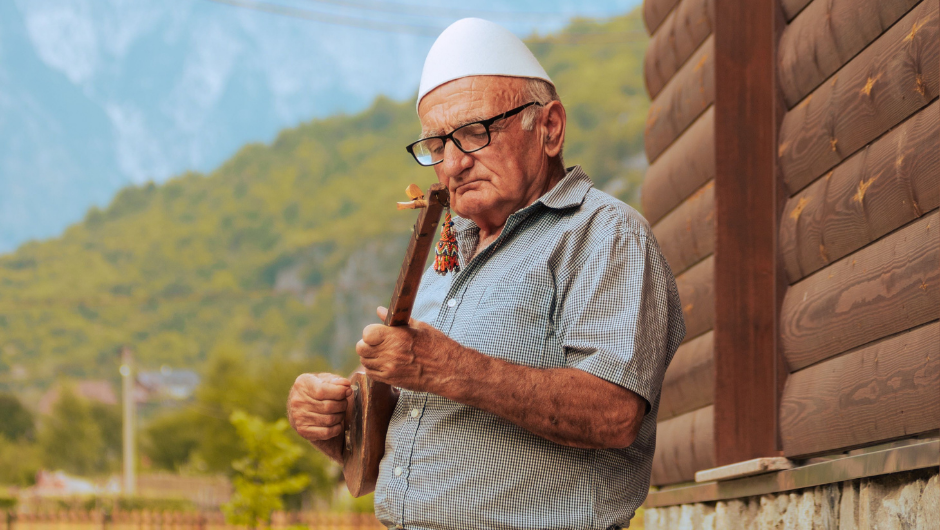
Albanian food is one of the great undiscovered cuisines of Europe — a rich, generous tradition shaped by Ottoman, Greek, and Italian influences, built on exceptional local produce, and served with a hospitality that can feel almost overwhelming in its warmth.
The Albanian concept of besa — a code of honour that includes the absolute obligation to welcome and protect guests — is not a tourist performance. It is a genuine cultural value, and you feel it in the way people receive visitors. Complete strangers will invite you into their homes for coffee. Restaurant owners will bring you dishes you didn't order because they want you to taste something they're proud of. It is one of the most endearing and surprising aspects of travelling in Albania.
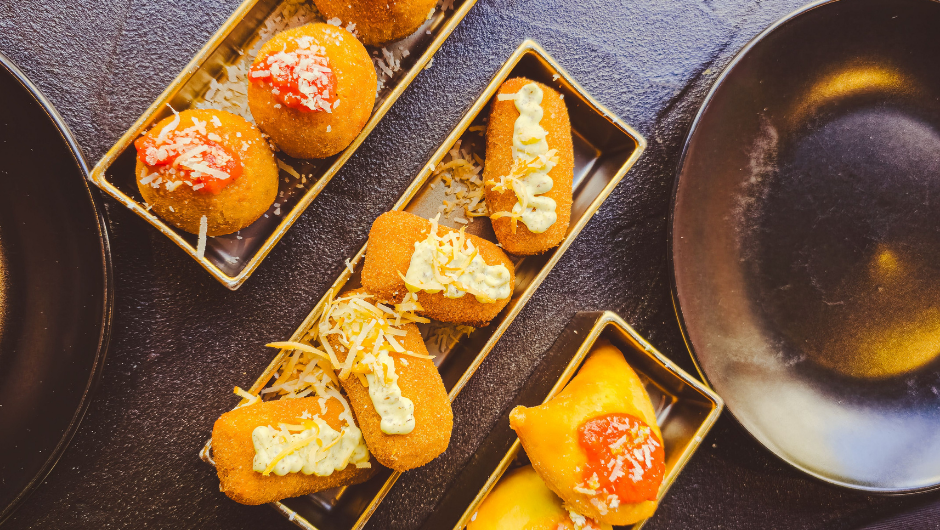
What to eat: Byrek (filo pastry filled with cheese or spinach), tave kosi (lamb baked in yoghurt), fërgësë (peppers, tomatoes, and cottage cheese baked together), grilled lamb, fresh seafood on the coast, and the extraordinary variety of mezze dishes that begin every proper Albanian meal.
What to drink: Raki — the Albanian grape or mulberry spirit — is the national drink, served as welcome and farewell. Albanian wine has improved dramatically in recent years, with the indigenous Shesh i Zi and Kallmet grapes producing reds of real character. The Cobo and Çobo wineries in the Berat region are worth seeking out.
Practical Information for Australian Travellers
• Visa: Australians do not need a visa to enter Albania for stays up to 90 days.
• Currency: Albanian Lek (ALL). Cash is widely used, particularly outside Tirana. ATMs are available in all major towns.
• Getting there: Most Australians fly via a European hub — Rome, Vienna, or Istanbul are the most common connections to Tirana's Mother Teresa Airport.
• Getting around: Renting a car is the best way to explore Albania, particularly the Riviera and the southern historical cities. Roads have improved dramatically but some mountain routes require care.
• Language: Albanian (Shqip) is the official language. English is widely spoken by younger Albanians in cities and tourist areas. Italian is useful on the coast.
• Safety: Albania is a very safe destination for international travellers. The country has worked hard to improve its reputation and the reality on the ground is a welcoming, low-crime environment.
Is Albania Right for You?
Albania is for travellers who are curious. Who want something beyond the well-worn path. Who find genuine pleasure in discovering a place before it becomes obvious. Who value authenticity over infrastructure, warmth over efficiency, and the feeling of being somewhere real over somewhere packaged.
If that sounds like you — Albania is waiting, and I promise it will surprise you in every possible way.
Book a free consultation with me today — I've been to Albania and I would love to help you plan a trip that goes well beyond the guidebook.