Montenegro: Why This Tiny Adriatic Nation is One of the Most Beautiful Places I've Ever Visited
The Bay of Kotor — Europe's Only Fjord South of Scandinavia
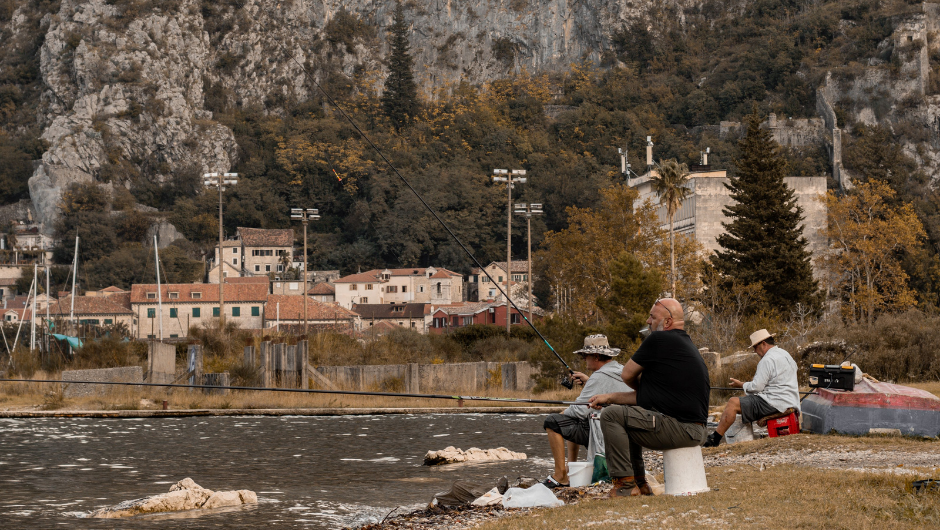
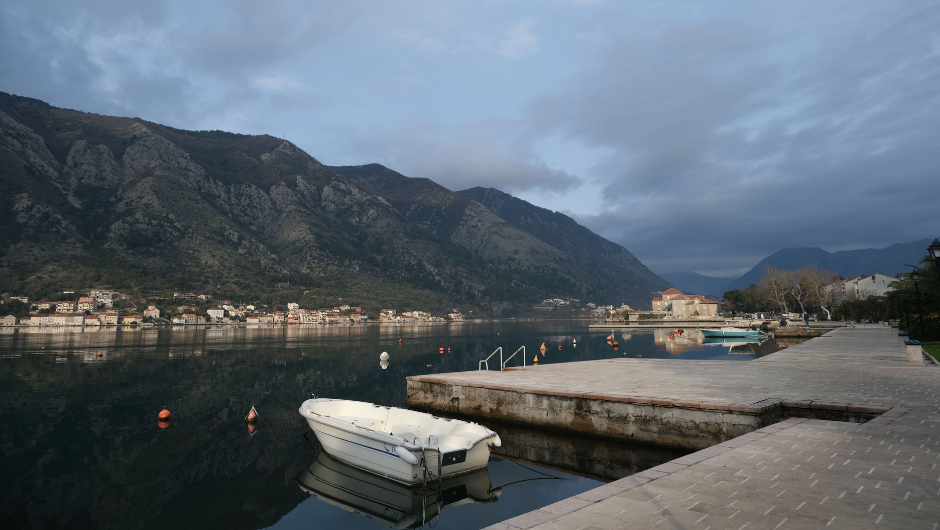
The Bay of Kotor is technically a submerged river canyon rather than a true fjord — but its effect on the visitor is identical: a sense of being enclosed by mountains that rise almost vertically from the water's edge, with medieval villages at their feet and the bay stretching in a series of curves that seem designed by an artist rather than geology. It is one of the most dramatic coastal landscapes in the world.
The bay is navigable — sailing or taking a boat through it is one of the great ways to experience it, watching the mountains shift and the villages appear around each bend. But even arriving by road, descending the famous serpentine from the mountains above Kotor and watching the bay reveal itself below, is an experience that stays with you. I have done that descent multiple times and it never becomes ordinary.
Kotor — A Medieval Walled City That Rivals Dubrovnik (With Far Fewer Crowds)
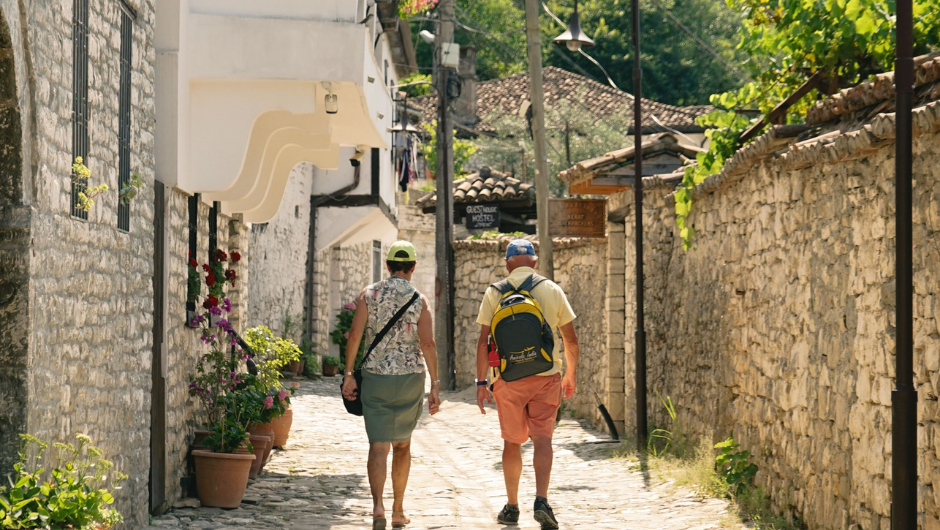
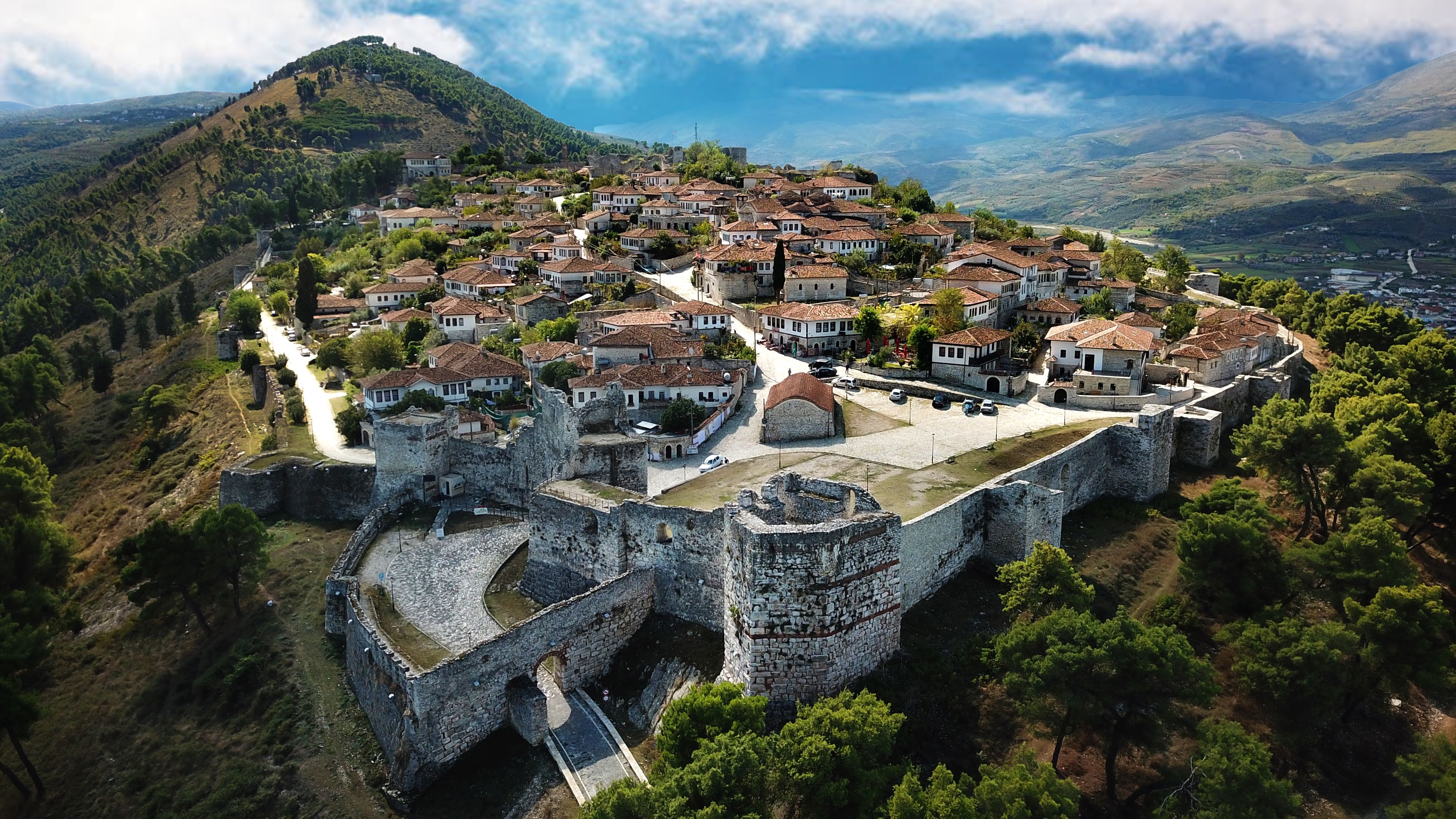
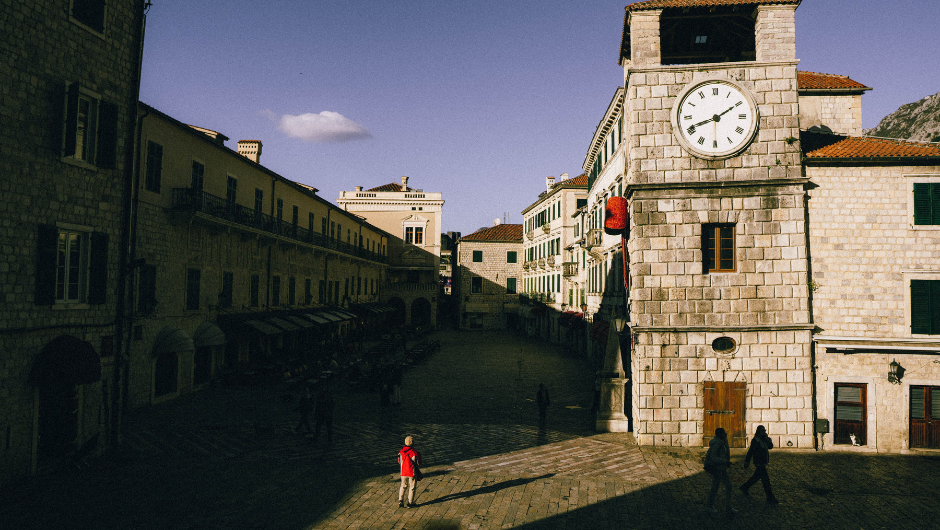
Kotor's Old Town is a UNESCO World Heritage Site — a magnificently preserved medieval city enclosed by walls that climb the mountain above it. The Cathedral of Saint Tryphon, the Maritime Museum, the maze of marble lanes and hidden squares, the cats (Kotor is famous for its cats, which have been associated with the city since the days of the Venetian sailors) — all of it contained within walls that you can walk in about ninety minutes and that give you views across the bay that are simply extraordinary.
I want to be direct about something that matters to Australian travellers planning this trip: Kotor is not Dubrovnik. Dubrovnik is magnificent and I recommend it — but it receives several million visitors a year and in peak season the crowds are significant. Kotor receives a fraction of that number. The experience of walking Kotor's walls or sitting in its squares is still, at the time of writing, one of uncrowded intimacy. That will change — Kotor is on the verge of broader discovery. Go now.
Staying in Kotor
The best accommodation in Kotor's Old Town is within the walls — several boutique properties and historic apartments give you the experience of waking up inside a medieval city. The evening, after the day visitors have left and the lanes have quieted, is when Kotor shows its best self: dinner at a stone-walled restaurant, a glass of local wine, the sound of the bay lapping against the city walls.
Best time to visit Kotor: May, June, September and October. July and August bring cruise ship crowds on some days — the difference between a weekday and a weekend in peak season can be significant. Shoulder season is the best of the city.
Perast — The Most Beautiful Village on the Bay
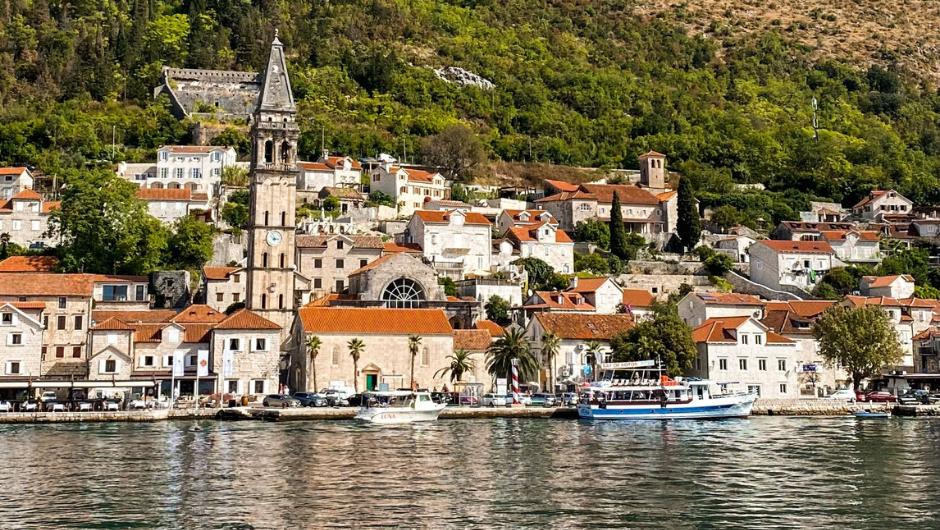
Twenty minutes by road from Kotor along the bay, Perast is a village of such extraordinary beauty that it stops visitors in their tracks. A single main street of baroque palaces running along the waterfront, two small islands floating in the bay directly in front of it, the mountains rising behind — Perast is one of those places that looks like it was imagined for a painting and then, somehow, built.
The two islands — Our Lady of the Rocks (a man-made island with a church and extraordinary collection of silver votive tablets) and St George (a natural island with a Benedictine monastery, closed to visitors) — are reached by small boat from the Perast waterfront. Our Lady of the Rocks is one of the most beautiful small churches I have entered anywhere in Europe, and the story of how the island was created — local sailors adding stones and rock each time they passed — is one of the most charming origin stories in Mediterranean culture.
There is a restaurant in Perast — I will not name it because these things change — where I ate the finest grilled fish of my entire European travels. Just caught, just cooked, with the bay literally at my feet and the island church in the view from the table. Some meals stay with you as benchmark experiences. That one did.
Sveti Stefan — Montenegro's Most Iconic Image
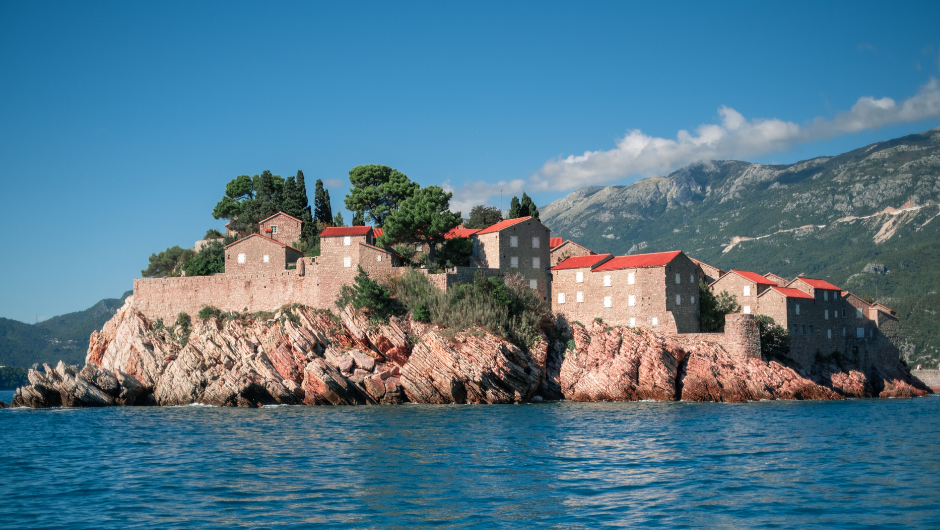
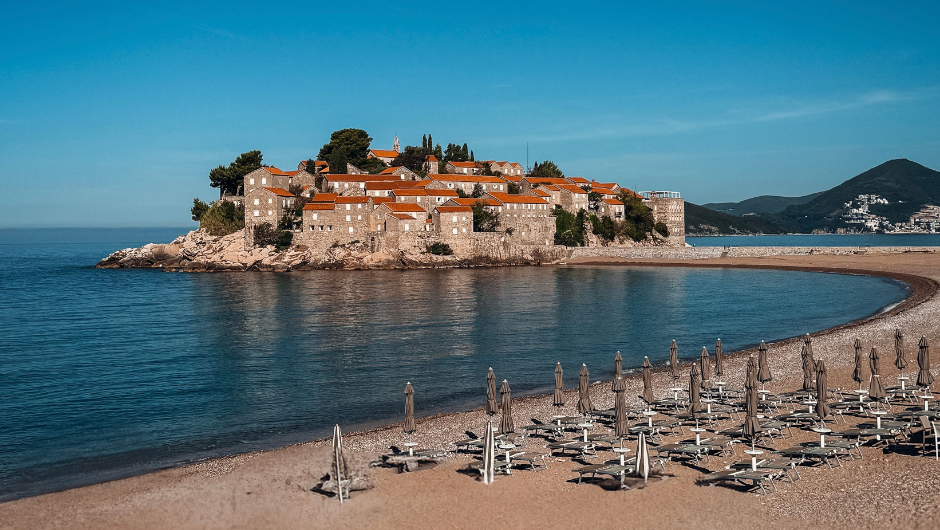
The small island of Sveti Stefan, connected to the mainland by a narrow causeway on Montenegro's Adriatic coast south of Budva, is one of the most photographed images in the entire Balkans — a cluster of terracotta-roofed medieval buildings on a rocky island, surrounded by sea on all sides. It is now operated as the Aman Sveti Stefan resort — one of Aman's finest properties — and staying there is an experience of genuine luxury in an extraordinary setting.
Even if you're not staying at Aman Sveti Stefan, the view of the island from the beach alongside is extraordinary and entirely accessible. Budva, the nearest town, is a pleasant base for the southern Adriatic coast and offers good restaurants and beaches at a significantly lower price point than the island itself.
The Montenegro Highlands — A Country of Two Halves
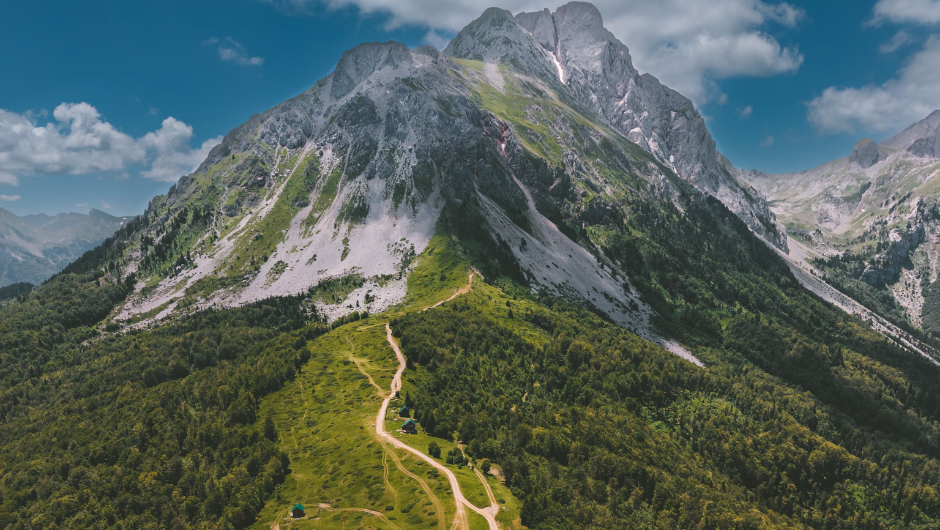
What many visitors to Montenegro don't realise is that the country is almost entirely mountains. The dramatic Adriatic coast represents only a narrow coastal strip — behind it, Montenegro rises through forested hills into a highland plateau of extraordinary wildness and beauty, culminating in Durmitor National Park: a UNESCO World Heritage Site of glacial lakes, deep canyons, and peaks rising above 2,500 metres.
The Tara River Canyon — the deepest river canyon in Europe — cuts through Durmitor in a gorge that is simply staggering in scale. Rafting the Tara is one of the great adventure experiences in the Balkans, and the drive through the highland to reach it passes through landscapes of alpine meadows and dense forest that feel genuinely far from the tourist infrastructure of the coast.
Žabljak, the highland town at the centre of Durmitor, is a base for hiking, skiing (in winter), and exploring the national park. The contrast between a morning on the coast and an afternoon in the mountains — entirely possible in a day in Montenegro — is one of the most dramatic geographical transitions available anywhere in European travel.
Montenegro Food and Wine — Shaped by Mountain and Sea
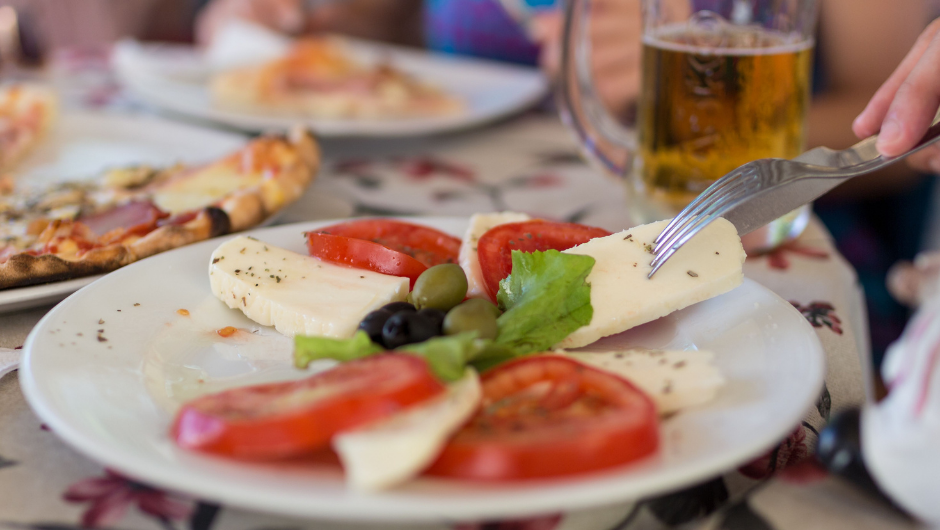
Montenegro's food tradition is shaped by its two dominant geographies — the coast and the mountains — and the result is a cuisine of wonderful contrast. On the coast, fresh seafood dominates: grilled fish, black risotto made with cuttlefish ink, mussels from the famously clean waters of the bay, and the local prscutto (air-dried ham) that is produced along the bay and rivals anything from Italy or Spain.
In the highlands, the food turns hearty and rich — roasted lamb, kacamak (a cornmeal and potato porridge dressed with cream and cheese that sounds simple and tastes extraordinary), wild game in season, and the dairy products of the mountain — kajmak (a clotted cream cheese) and young highland cheese — that are among the finest I have encountered anywhere in Europe.
Montenegro's wine industry is anchored by the indigenous Vranac grape — a rich, tannic red with deep colour and substantial character that is produced primarily in the Plantaže winery near Podgorica, which manages one of the largest single vineyards in Europe. Vranac at its best is excellent — bold, food-friendly, and entirely distinctive. Pair it with slow-roasted lamb in a highland restaurant and you have one of the finest simple food and wine experiences the Balkans offers.
History and Culture — Centuries of Crossroads
Montenegro's history is written in layers — Illyrian, Roman, Byzantine, Venetian, Ottoman, Austro-Hungarian — and the evidence of those layers is everywhere. The Venetian walls of Kotor. The Ottoman mosques of the interior. The Austro-Hungarian architecture of the coastal towns. The Serbian Orthodox monasteries perched on mountain slopes, some of them accessible only on foot, all of them places of deep quiet and extraordinary frescoed beauty.
The Ostrog Monastery — carved directly into a vertical cliff face in the central highlands — is one of the most dramatic religious sites in the entire Balkans, and a place of genuine pilgrimage for Orthodox Christians from across the region. Visiting it, even as a non-religious traveller, is an experience of real power. The setting alone — a white monastery seemingly embedded in solid rock — is unlike anything else I have seen in Europe.
Montenegro's cultural identity is complex and fiercely debated — questions of Montenegrin vs Serbian identity remain politically charged. As a visitor, the most honest approach is to listen, observe, and avoid taking sides in conversations that have roots going back centuries. What is unambiguous is the extraordinary richness of the culture that this small country has produced and preserved.
Practical Information for Australian Travellers
• Visa: Australians do not need a visa to enter Montenegro for stays up to 90 days.
• Currency: Euro (EUR), despite Montenegro not being an EU member. Cash is useful in smaller towns and rural areas.
• Getting there: Most Australians connect through a European hub to Podgorica airport (the capital) or Tivat airport (closest to the Bay of Kotor — often the better choice for a coastal-focused itinerary). Dubrovnik airport across the border in Croatia is another option for the bay area.
• Getting around: A hire car is essential for experiencing the highlands and moving between the coast and the interior. The Bay of Kotor is navigable by boat, which I strongly recommend for at least a half day.
• Combining with Albania: The border crossing between Montenegro and Albania at Shkodër is straightforward and the two countries combine beautifully in one itinerary — see my Albania posts for the full picture.
Why Montenegro Now
Montenegro is at a tipping point. It has applied for EU membership and continues to develop its tourism infrastructure rapidly. The bay area around Kotor has seen significant investment in recent years, and some of that development is changing the character of specific areas. The window for experiencing Montenegro as a genuinely undiscovered destination is narrowing.
Go now. Walk the walls of Kotor before the cruise ships have arrived in the morning. Eat fish in Perast as the island church catches the evening light. Drive up into Durmitor and feel the extraordinary stillness of a highland plateau that most European tourists will never reach. This is one of the finest travel experiences Europe offers — and it remains, for now, a secret.
Book a free consultation with me today — I've been to Montenegro and I would love to help you plan a trip that shows you the very best of it.